






- Mayor : Hassen Hanchi
- Region – Gouvernorate : Mahdia
- Website : www.commune-mahdia.gov.tn
Presentation
Mahdia is a Tunisian coastal city located 200 kilometres south of the capital Tunis. This capital of the governorate of the same name is a municipality that had 45,977 inhabitants in 2004.
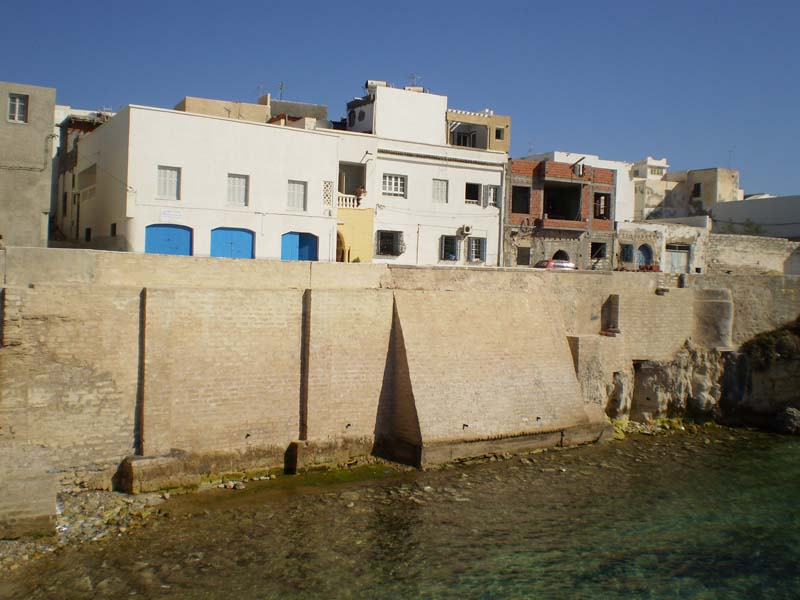
Originally developing on a peninsular 1,400 metres long and 500 metres wide, it boasts one of the country’s largest fishing ports. Tourism is growing in importance in the local economy. The old town is a hub for services that gradually developed a higher education centre, particularly with the founding of the Faculty of Economics and Management in 1999.
While the historic centre is situated on the peninsula, the city has since spread inland, particularly with the districts Hiboun and Ezzahra.
. Location of the city
The city of Mahdia is located at the edge of the Tunisian Republic; it is hemmed in by the Mediterranean Sea on three sides and is part of the African continent on the western side.
This city is like a peninsula in the middle of the sea, it’s only option being to expand to the west.
This geographical disposition means careful consideration needs to be given to its development and how to plan for expansion of the commune, while keeping an eye on fertile land located on the outskirts of the city.
Seen from above, the city of Mahdia reveals a mosaic of colours and landscapes. These landscapes differ from one area to the next. The northern side is very developed relative to the use of available space and building coverage. The southern side remains inadequately developed. It is said that the city is like a bird with only one wing. Its second wing has not yet fully developed.
Activities are concentrated along the central section with administrative buildings; as for the northern and western parts, these are mainly residential districts. The Sabkha, a lagoon, takes up a considerable amount of space, accounting for 30% of the total surface area. Adjacent to the Sabkha, there is a sporting complex surrounded by working-class areas with a homogeneous population whose income is low to average.
The city of Mahdia needs to address this situation and make adjustments to the city development plan to take control of its expanding population and manage the spaces.
Having said that, the city is facing a series of issues that are urging it towards solutions that will not be to everyone’s liking. The belt surrounding the city is composed of very fertile farmland. This is a major asset and resource that needs to be safeguarded to supply the city with agricultural consumables. This 10-kilometre-wide belt, located west of the city, is a significant real estate asset. The land is privately owned and well exploited.
. History of Mahdia
Its strategic geographical position and fortifications enabled the city – successively known by the names Jemma, Aphrodisium and Cape Africa – to play a leading role in the Mediterranean Basin up until the 16th century. Mahdia was initially a Phoenician then a Roman trading post, under the name Aphrodisium. The Mahdia shipwreck – which dates back to the 1st century bce and whose cargo was Athenian objets d’art – was discovered six kilometres off the coast of Mahdia in the 20th century, around 1907, and has since become one of Tunisia’s most prolific underwater archaeology sites.
The year 906 saw the arrival of the first Fatimid caliph, Ubayd Allah al-Mahdi, who ordered the foundation of ‘Mahdia’, as it is called today; its construction took five years. The city became the capital of the Fatimids in 921, remaining so until 923, when it was superseded by Cairo. Under siege for eight months (944-945) from the Kharijites under the leadership of their chief Abu Azid, the city resisted victoriously. In 1057, the Zirids took refuge there to escape the Hilalian threat.
In 1806-1807, to put an end to pirate attacks on the region especially those orchestrated by the Zirid ruler Tamim (1062-1108), the major merchant cities of the northern Mediterranean Basin – Genoa, Pisa, Amalfi, Salerno and Gaeta – commissioned warships and took Mahdia. The attack, led by Hugh of Pisa, received assistance from Rome. The lord Pantaleone d’Amalfi was also involved, and support was received from Matilda of Tuscany.
Although Mahdia was taken, the Italians were unable to hold it. The monetary spoils were spent on the Cathedral of Pisa and the construction of a new church. Historian of the Crusades Carl Erdmann considers this raid to be a direct precursor of the first Crusade, which began eight years later, as it was undertaken under the banner of St Peter against a Muslim leader. The Norman king Roger II of Sicily occupied it in 1148, maintaining his seat until early 1160, when the city fell into the hands of the Almohads. The city then lost its political importance to Tunis, remaining however a major port. The city suffered several sieges over the course of its history.
In 1390, after losing its commercial positions in Tunisia to Venice, Genoa organised a military expedition in the guise of another crusade, under the pretext of retaliating against the Barbary pirates’ attacks on Christians; the city received assistance from a body of French and English lords, which included Louis II de Bourbon who took command. The stronghold – defended by the Berbers of Bougie, Bône, Constantine and other regions of the Maghreb, who had come to the rescue of the Tunisians – held out against all attacks. The Europeans, who were soon divided by dissension, were obliged to take to the seas again after 61 days of unsuccessful fighting.
Mahdia was taken in the 16th century by the pirate Dragut, who made it his haven. Charles V seized the city in 1550, and the Spanish remained there until 1554.
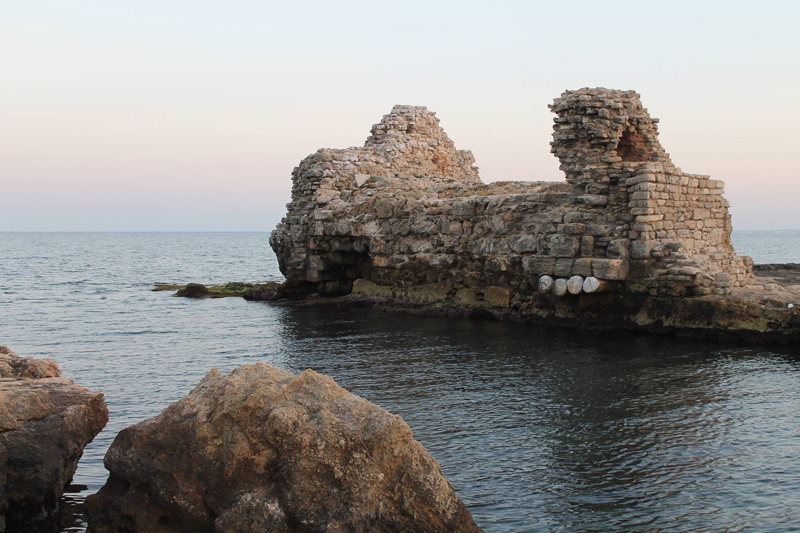
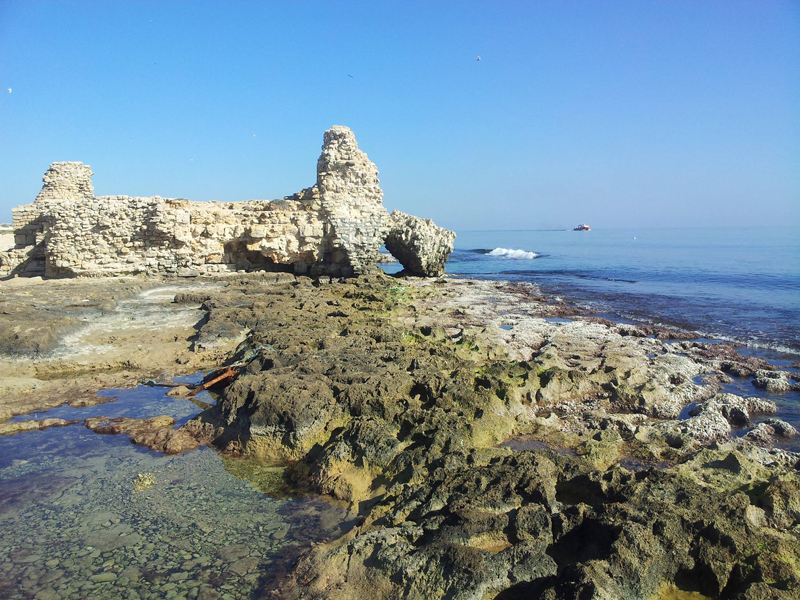
Just before leaving, they blew up the ramparts, which the Ottomans would only partially rebuild on their return. The city gradually found peace again and became one of Tunisia’s biggest fishing ports.
The city has a few monuments and points of interest.
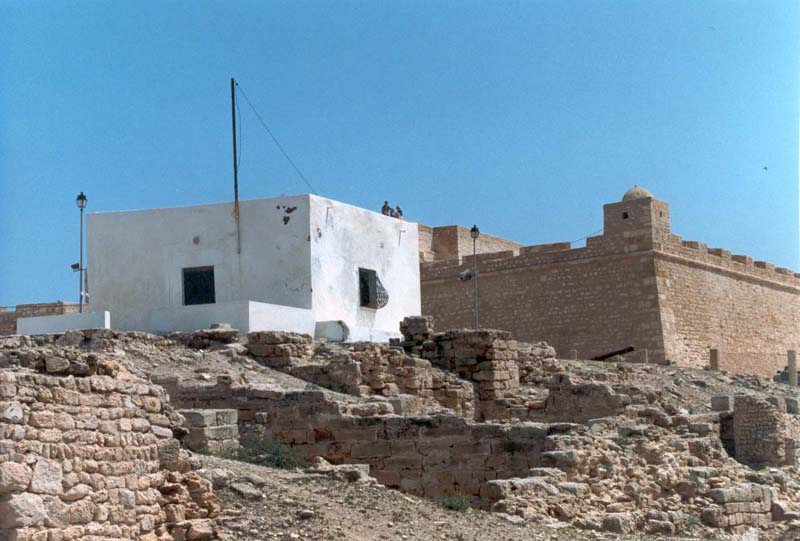
The Skifa Kahla or Bab Zouila, a large, early-10th-century fortified gate, constructed between 916 and 921 then restored in the 16th century; it is still one of the few historic city centre access points and one of the few remaining sections of the old ramparts. Borj El Kebir, a fortress with a curved, vaulted passage leading to an impressive courtyard that has overlooked the tip of Cape Africa since 1595.
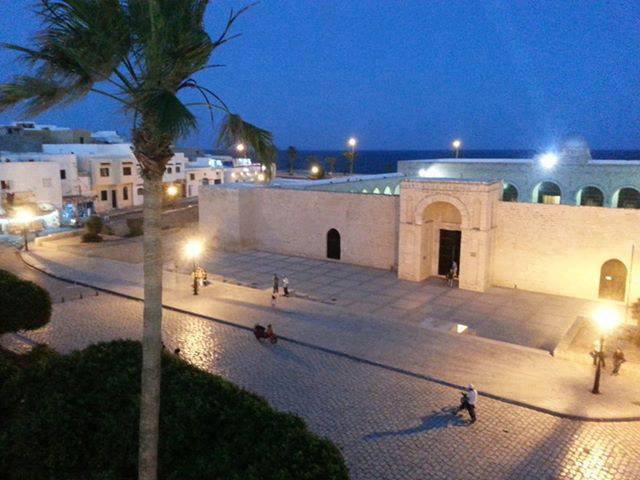
The large mosque, founded in 916 by Shiite Ubayd Allah al-Mahdi, is unique in that it has no minaret. It underwent several modifications and renovations before finally being rebuilt between 1961 and 1965 according to its 10th-century plans.
The Hadj Mustapha Hamza mosque, built in 1772 then restored during the 20th century, is a fine example of religious architecture of the Ottoman period.
Mahdia is also known for its marine cemetery, situated on the waterfront at the tip of the peninsula.
. Mahdia’s economy
Today, Mahdia’s economy is mainly focused on tourism, fishing and olive growing. The fishing port is very lively at certain times of day and has its own canneries that package bluefish. Trawlers equipped with lamps for night fishing can be seen here.
The city, situated east of a large olive tree plantation, is home to oil mills that produce olive oil as well as soap with a 72% olive-oil base. The city is also known for its wool and silk textiles and for its crafts (e.g. jewellery, leather, wood, etc.).
The white sandy beaches, numerous hotels and the city’s troubled history make it a popular seaside town. The tourist area is located in the north of the city, more specifically opposite the district of Hiboun. The vast majority of the city’s hotels are situated on the waterfront and offer a variety of services.
. Mahdia’s agricultural activities
Mahdia’s agriculture is concentrated in the adjacent belt. The land there is largely planted with vegetable crops. Production of fresh produce like lettuce, tomatoes etc. intended to be consumed rapidly and sold in local markets each week.
The second activity is olive growing, also in this outlying belt. Production is intended for local consumption, and a portion is exported.
Sheep and cattle breeding, practised by farmers, is a third agricultural activity that developed in the working-class areas, thus supplying the city with meat, milk, eggs and wool, etc.